Professional Recaulking in Kingwood and The Woodlands
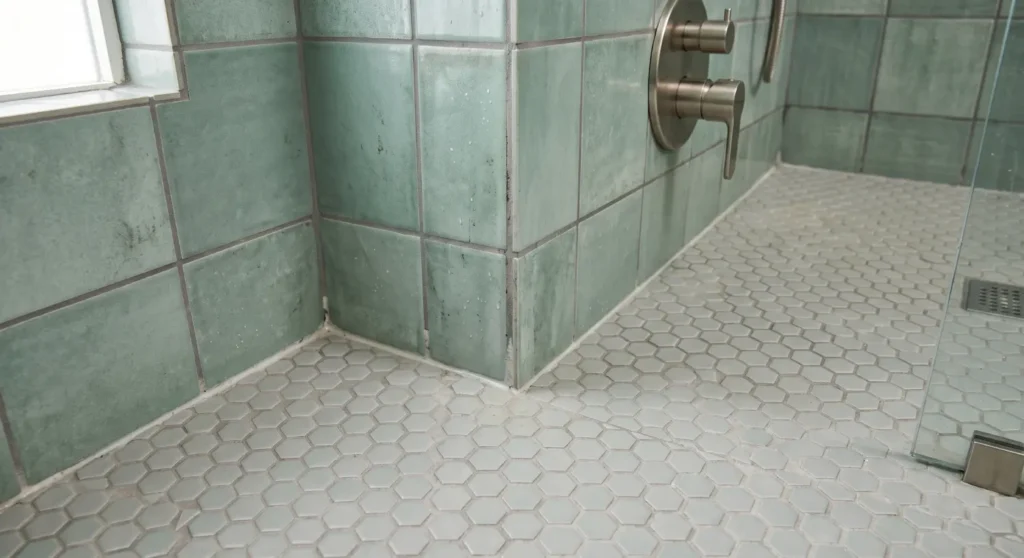
Cracked, peeling or deteriorated caulk can make showers, tubs and tiled areas look worn while leaving joints unprotected.
The Grout Medic removes failed caulk and replaces it with a clean, properly finished seal throughout Kingwood, The Woodlands and surrounding communities.
Caulk is designed to remain flexible, but it can eventually shrink, crack, separate or discolor.
Once the seal begins to fail, simply applying new caulk over the old material usually does not provide a clean or lasting result. The deteriorated caulk should be removed before the joint is properly prepared and recaulked.
Common Signs You May Need Recaulking
Cracked or Split Caulk
Visible cracks can develop as caulk ages or as movement occurs between adjoining surfaces.
Peeling or Separated Caulk
Caulk that has pulled away from the tile, tub or surrounding surface is no longer creating a proper seal.
Missing Caulk
Gaps where caulk has deteriorated or fallen away should be evaluated and replaced.
Persistent Discoloration
Older caulk can become stained or discolored over time. When cleaning no longer improves the appearance, replacement may be the better option.
Where Recaulking Is Commonly Needed
Showers
Corners, edges and transitions in shower areas rely on flexible joints that can deteriorate with age and repeated use.
Bathtubs
The joint between the tub and surrounding tile can crack or separate over time and may need to be recaulked.
Backsplashes & Countertops
Caulk around tiled backsplashes, countertops and adjoining surfaces may also require replacement as it ages.
How Professional Recaulking Works
Existing failed caulk is removed from the affected joint and the area is cleaned and prepared before new caulk is applied.
Proper preparation is important because new caulk needs a clean surface to bond effectively.
The finished joint is then smoothed for a neat, consistent appearance.
Recaulking vs. Regrouting
Caulk and grout are used in different areas.
Grout is generally used between individual tiles, while flexible caulk is commonly used where surfaces meet or change direction, such as shower corners, tub edges and certain transitions.
If the grout between tiles is cracking or deteriorating, regrouting may be the appropriate service instead.
For the best result, deteriorated caulk should usually be removed before new material is applied.
Applying new caulk over cracked, loose or contaminated material can prevent proper adhesion and leave the underlying problem in place.
Recaulking in Kingwood and The Woodland
The Grout Medic provides professional recaulking throughout both local service areas.
Choose your location for service-area information and communities served.
How do I know when shower caulk needs to be replaced?
Caulk may need replacement when it is cracked, peeling, separating from the surface, missing in sections or no longer creating a consistent seal.
Can you recaulk over existing caulk?
Existing failed caulk should generally be removed first. Removing the old material allows the joint to be cleaned and prepared so the new caulk can bond properly.
Is recaulk the same as regrouting?
No. Recaulking replaces flexible sealant used around joints, corners and transitions. Regrouting replaces deteriorated grout between tiles.
Can discolored shower caulk be cleaned instead of replaced?
Sometimes. Surface buildup may respond to cleaning, but caulk that remains badly stained, cracked or deteriorated may be better replaced.
Why does shower caulk keep cracking?
Caulk can crack because of age, movement between surfaces, poor adhesion or deterioration of the material. Repeated failure in the same area may need additional evaluation before new caulk is installed.
Does recaulk mean my shower needs to be remodeled?
No. Failed caulk can often be removed and replaced without replacing the surrounding tile or remodeling the entire shower.
Replace Failed Caulk Before It Gets Worse
If the caulk around your shower, tub or tiled surface is cracking, peeling or separating, we can evaluate the joint and determine whether recaulking is the right solution.