
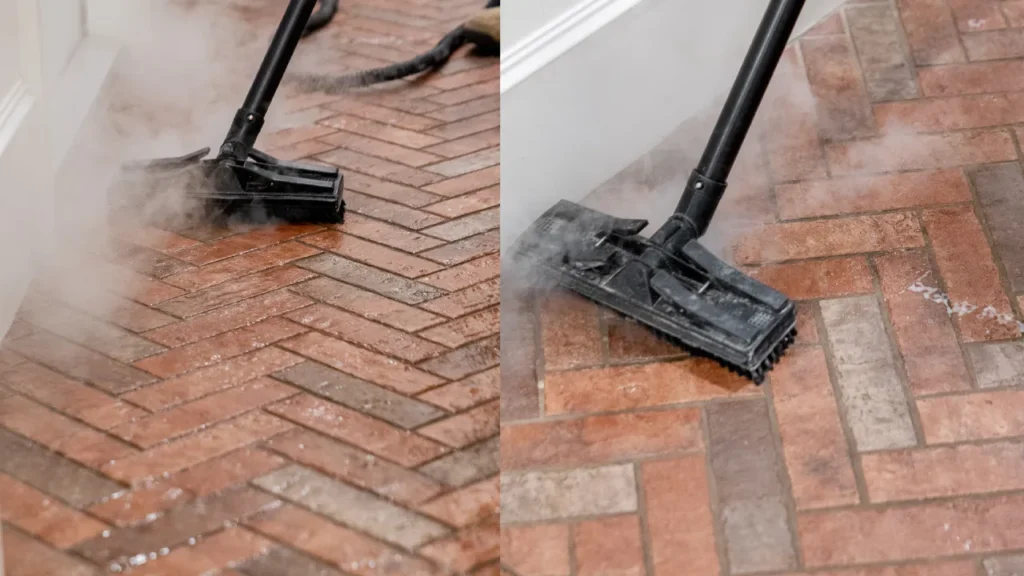
Yes. Steam cleaning can help loosen dirt and buildup from many types of grout, particularly in showers and on tile floors where ordinary wiping and mopping leave grout lines looking dull. But the condition of the grout, the tile material and the way the steam is applied all matter. Steam is a cleaning method, not a repair for failing grout or a guarantee that every microorganism is eliminated.
Why grout stays dirty after you clean the tile
Tile can look clean while the lines between the tiles still look gray, brown or patchy. That difference is frustrating, especially when you have already scrubbed the floor or shower several times. The reason is often the grout itself. Many cement-based grouts have a porous structure and a textured surface that can hold onto soil, soap residue and other buildup. A mop may clean the tile face without doing much to lift stubborn material in the grout joints.
This does not mean every dark grout line is dirty. Pigment variation, old staining, worn sealers and damaged grout can create a similar appearance. Knowing which problem you have is the first step toward choosing the right solution.
How does steam clean grout?
A steam cleaner directs hot vapor toward the tile and grout surface. The heat and moisture help loosen adhered soils so they can be removed with suitable tools and a controlled cleaning process. In a shower, that may include soap residue and everyday buildup around grout joints. On a floor, it may include grime that routine mopping has left behind.
Jeff Brown, local owner of The Grout Medic serving The Woodlands and Kingwood, explains in his video that his team uses high-temperature steam over the tile and grout and follows cleaning with appropriate sealing. He references equipment operating at approximately 300°F. That figure describes the system as discussed in the video, not a verified temperature maintained within the grout. Steam cools as it moves from the equipment to the surface, which is one reason professional technique matters.
One distinction homeowners should know: visible vapor alone does not tell you which cleaning technology a company uses. Steam-vapor cleaning and hot-water extraction can be different processes. Ask what equipment and method will actually be used on your tile.
Does steam cleaning sanitize grout?
Heat can reduce certain microorganisms when an appropriate temperature is maintained for sufficient contact time. However, equipment temperature alone is not proof that a porous grout joint has been disinfected or sterilized. The surface material, steam delivery, exposure time and test method all affect the result.
That distinction is especially important in showers, where a warm, frequently damp environment can support recurring buildup and microbial growth. Steam cleaning can be a useful part of restoring a shower, but persistent moisture problems need to be addressed separately. If growth keeps returning quickly, cleaning the visible surface may not resolve the underlying cause.
When is professional steam cleaning worth considering?
Professional tile and grout cleaning may make sense when the tile looks acceptable but the grout remains dark, when shower grout has accumulated stubborn soap residue, or when a larger tiled area has uneven discoloration that ordinary cleaning has not improved. A professional should first determine whether the grout is sound and whether the tile and grout materials can tolerate the proposed process.
For example, some specialty grout products have limits on steam-cleaning temperatures. Damaged grout, loose tile and sensitive natural stone can also require a different approach. A professional should not simply apply more heat or pressure because a stain is difficult to remove.
What steam cleaning cannot fix
Steam cannot replace missing grout, rebond loose tile, correct an active leak or repair a failed shower assembly. It also may not remove a stain that has permanently altered the grout’s appearance. Those situations call for a different conversation: targeted grout repair, regrouting, caulking, color sealing or another appropriate remedy, depending on what an inspection reveals.
That is why a useful estimate begins with the condition of the grout, not just how dirty it looks. Cleaning a damaged joint more aggressively does not make that joint sound again.
Why does grout sealing matter after cleaning?
Once eligible grout has been cleaned and prepared, applying the correct grout sealer can help reduce the absorption of future spills and staining. It can make routine maintenance easier, but it does not make grout entirely stain-proof, replace the waterproofing beneath tile or eliminate the need to keep a shower ventilated and dry between uses.
Not every installation calls for the same treatment. The grout type, existing coatings, tile material and condition of the joints should guide whether sealing is appropriate and which product to use. Jeff’s emphasis on sealing after cleaning makes sense as part of a broader maintenance plan, provided the surface is compatible and properly prepared.
Is a home steam cleaner enough?
For some sound, compatible tile and grout surfaces, a household steam cleaner can help with routine buildup. Check the appliance instructions and grout or tile manufacturer recommendations first. Test a discreet area, avoid lingering over a single joint, and do not steam damaged or loose surfaces. Take extra care with natural stone, specialty grout and existing sealers.
If repeated cleaning has not changed the appearance, using a stronger chemical or more intense heat is not necessarily the answer. The issue could be staining, deterioration or a material that needs a different treatment. That is a good point to have the grout evaluated rather than escalating your cleaning routine.
Tile and grout cleaning in The Woodlands and Kingwood
Homeowners in The Woodlands and Kingwood use tiled showers, bathrooms, kitchens and living areas every day. Different rooms create different types of buildup, and the right cleaning method depends on both the surface and the problem. The Grout Medic’s local team, led by Jeff Brown, evaluates tile and grout conditions to help determine whether professional steam cleaning, sealing or a separate restoration service is the appropriate next step.
If your grout no longer responds to normal cleaning, request a free in-home estimate with The Grout Medic of The Woodlands and Kingwood. An evaluation can help you understand what cleaning may accomplish and whether any repairs should come first.
Frequently asked questions
Can you steam clean grout without damaging it?
Often, yes, when the grout is sound and the equipment is appropriate for the grout and tile. Some specialty grouts or natural-stone installations have manufacturer restrictions, so there is no universal safe setting.
Will a steam cleaner remove black stains from shower grout?
Steam can loosen some surface residue, but it cannot guarantee removal of deep staining or discoloration. Recurring black marks may also signal an unresolved moisture issue that needs separate attention.
Does steam cleaning kill all bacteria in grout?
No blanket claim is justified. Heat can reduce microorganisms under appropriate conditions, but actual performance depends on surface temperature, contact time, equipment and grout condition.
Should grout be sealed after steam cleaning?
Sealing may be recommended for compatible grout after it has been cleaned, dried and prepared according to the sealer manufacturer’s instructions. The grout type and existing finish determine whether sealing is appropriate.
Is steam cleaning better than bleach for grout?
They work differently. Steam uses heat to help loosen buildup; cleaning chemicals may target particular stains or contamination. Neither is universally best, and harsh or incompatible cleaners can damage certain materials or finishes.
Can steam cleaning repair cracked or missing grout?
No. Steam cleaning is not a structural repair. Cracked, loose or missing grout should be evaluated for repair or replacement before an aggressive cleaning process is considered.